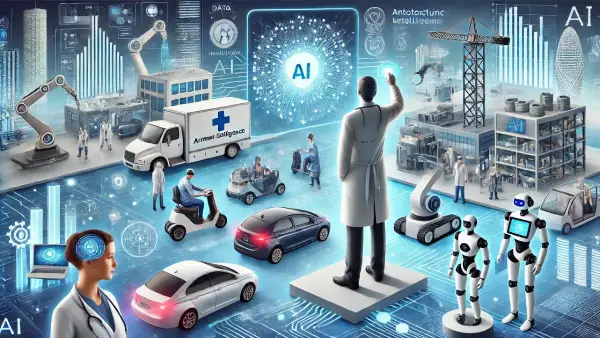
Artificial intelligence is no longer a futuristic concept reserved for research labs and science fiction movies. In recent years, AI has quietly become part of everyday work across industries. From writing emails and analyzing data to automating customer support and generating creative content, AI tools are transforming how people perform daily tasks.
What makes this shift particularly significant is that AI is not only affecting specialized technical jobs. It is reshaping ordinary work routines for millions of people in offices, remote environments, creative industries, and service roles.
Understanding how artificial intelligence is changing everyday work can help professionals adapt, develop new skills, and take advantage of the opportunities created by this technological shift.
The Shift From Automation to Augmentation
Earlier waves of workplace technology focused primarily on automation — replacing repetitive tasks with machines or software.
Artificial intelligence introduces a different dynamic. Instead of simply replacing tasks, many AI tools augment human capabilities, helping people complete work faster and more effectively.
For example, AI systems can:
- summarize long documents
- generate first drafts of written content
- analyze large datasets
- suggest design ideas
- automate routine communication
Rather than replacing workers entirely, AI often acts as a collaborative assistant, reducing time spent on repetitive work and allowing people to focus on higher-level thinking.
AI as a Productivity Tool
One of the most immediate impacts of AI in the workplace is increased productivity.
Many professionals now use AI tools to assist with tasks such as:
- writing reports or emails
- brainstorming ideas
- organizing research
- generating code snippets
- creating presentations
These tools can dramatically reduce the time required to complete certain tasks.
For example, a report that once took several hours to draft might now be created in minutes with the help of AI-generated outlines and summaries.
This shift allows workers to allocate more time to strategy, creativity, and decision-making.
The Rise of AI-Assisted Creativity
Creative industries have also experienced significant changes due to AI.
Tools powered by artificial intelligence can now assist with:
- graphic design
- video editing
- music production
- marketing content
- storytelling
For many creators, AI functions as a creative partner rather than a replacement.
Writers may use AI to overcome writer’s block. Designers may generate concept sketches quickly before refining them manually. Marketers may use AI tools to generate campaign ideas or analyze audience behavior.
This collaboration between human creativity and machine intelligence is creating entirely new creative workflows.
AI in Communication and Collaboration
Communication is another area where artificial intelligence is making everyday work easier.
AI-powered systems can now help with:
- automatic meeting summaries
- transcription of conversations
- translation between languages
- email drafting and response suggestions
These features reduce the administrative workload associated with communication.
For remote teams and global organizations, AI-powered translation and summarization tools also make collaboration across languages and time zones more efficient.
Customer Service Transformation
Customer support has historically required large teams handling repetitive inquiries. Artificial intelligence is now transforming this area of work.
AI-powered chatbots and virtual assistants can handle common questions instantly, such as:
- order tracking
- account information
- troubleshooting steps
- scheduling appointments
Human support agents still play a crucial role, especially for complex or sensitive situations. However, AI systems often manage the initial stages of customer interactions.
This combination allows companies to provide faster service while enabling human employees to focus on more complicated issues.
Data Analysis Becomes Accessible
Data analysis used to require specialized training in statistics or programming. AI tools are now making data insights accessible to a much broader range of professionals.
Modern AI systems can:
- analyze spreadsheets
- identify trends
- generate visualizations
- summarize key insights
This democratization of data analysis allows employees in marketing, sales, operations, and management to make more informed decisions without needing advanced technical expertise.
The ability to quickly interpret data is becoming a valuable skill in many roles.
The Emergence of New Job Roles
As AI becomes integrated into everyday work, new types of jobs are emerging.
Some of these roles include:
- AI prompt specialists
- automation consultants
- AI workflow designers
- data curators
- AI ethics advisors
These positions focus on managing, guiding, and optimizing AI systems rather than replacing them.
Historically, technological revolutions often create new industries and job categories even as they transform existing roles.
The Skills That Matter in an AI-Driven Workplace
As artificial intelligence becomes more common in the workplace, certain skills are becoming increasingly valuable.
Technical skills related to AI tools are helpful, but human capabilities remain essential.
Key skills include:
Critical thinking
AI systems can generate information quickly, but humans must evaluate accuracy and context.
Creativity
Original ideas and creative problem-solving remain uniquely human strengths.
Communication
Explaining ideas clearly and collaborating effectively continues to be crucial in modern workplaces.
Adaptability
Technology evolves rapidly, and professionals who can learn new tools quickly are better positioned for success.
Workers who combine these human skills with AI-assisted productivity tools often gain significant advantages.
Concerns About Job Displacement
Whenever new technology appears, concerns about job loss naturally arise.
Artificial intelligence will undoubtedly change some roles, especially those involving repetitive or routine tasks.
However, historical patterns suggest that technological change often transforms jobs rather than eliminating them entirely.
Many tasks within jobs may become automated, but new responsibilities and opportunities often emerge.
The challenge for workers is learning how to integrate AI into their workflows rather than resisting it entirely.
The Future of Everyday Work
Artificial intelligence is still evolving rapidly, and its long-term effects on work are still unfolding.
In the coming years, we are likely to see:
- more AI-powered productivity tools
- smarter digital assistants
- increased automation of routine tasks
- deeper integration of AI into business operations
Rather than replacing human workers wholesale, AI will likely continue functioning as a powerful productivity partner.
Organizations that successfully combine human creativity with AI capabilities may experience major improvements in efficiency and innovation.
Artificial intelligence is no longer a distant technological promise. It is already changing how millions of people work every day.
From assisting with writing and design to automating communication and analyzing data, AI tools are reshaping workflows across industries.
For workers, the key to thriving in this environment is not competing with artificial intelligence but learning how to collaborate with it effectively.
Those who embrace AI as a tool for productivity, creativity, and problem-solving will likely find themselves better equipped for the future of work.
In the end, the real impact of AI is not just about machines becoming smarter — it’s about humans becoming more capable with the help of intelligent tools.